Soil Moisture Sensor Module for Arduino
= Reliable Plant Moisture Detection for Smart Gardening and Irrigation Projects =
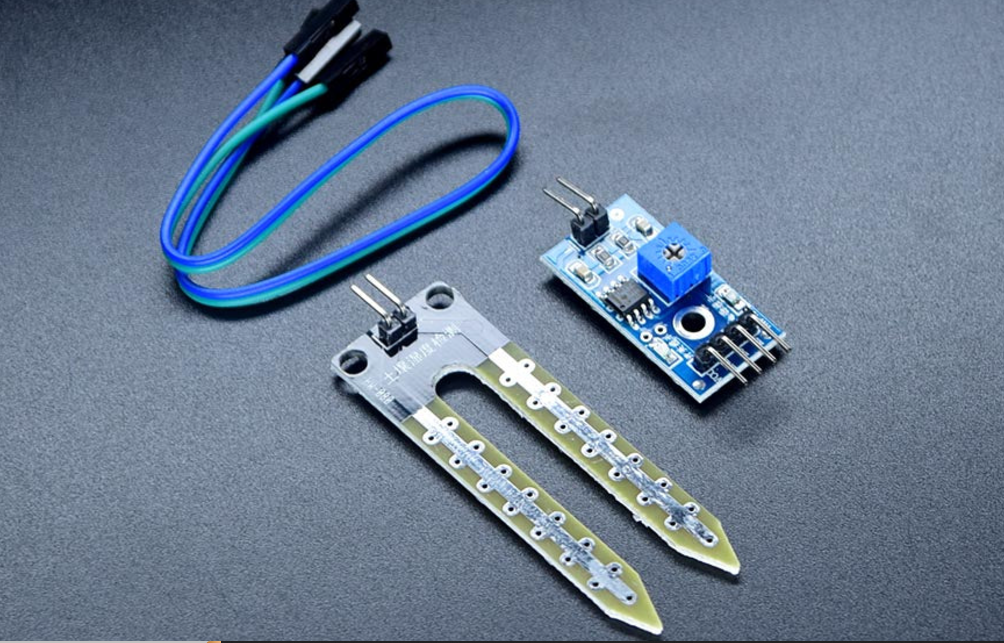
This soil moisture sensor measures water content in soil, providing essential data for automated plant watering systems and smart gardening projects. Compatible with Arduino and similar microcontroller boards, it offers a simple solution for monitoring plant health and automating irrigation.
Easy Soil Moisture Detection - Provides analog output proportional to soil water content
Compatible with Arduino and 5V/3.3V systems - Wide operating voltage range for flexible use
For resistive sensors, connect VCC to 5V (or 3.3V), GND to ground, and AO to an analog input pin on your microcontroller .
For longterm use, capacitive sensors are more corrosionresistant and durable than resistive types .
= Technical Specifications =
| Parameter | Value |
|---|
| Operating Voltage | 3.3V to 5.5V DC |
| Output Type | Analog (03.0V or 01023 ADC value) |
| Interface | 3-pin (VCC, GND, AO) |
| Dimensions | ~99mm x 16mm (capacitive V1.2) |
= Key Features =
+Analog Output - Provides a variable voltage signal corresponding to soil moisture levels
+Low Power Consumption Suitable for batterypowered IoT applications
+Builtin Comparator (some models) Digital output option with adjustable threshold via potentiometer
+CorrosionResistant Option Capacitive sensors resist oxidation for extended lifespan
+Wide Compatibility - Works with Arduino, ESP32, and Raspberry Pi (with ADC)
== Applications ==
- Smart irrigation and automated watering systems
- Greenhouse and plant health monitoring
- Garden and agricultural soil analysis
- Environmental research and data logging
- Educational STEM projects
Versatile Sensing Accurate, lowcost solution for soil moisture monitoring
Easy to Use Simple 3pin wiring with analog signal output
√ Easy integration with Arduino, ESP32, and other microcontrollers
√ Suitable for indoor and outdoor gardening projects
√ Available in both resistive and capacitive versions for different needs
= Troubleshooting =
Inconsistent readings:
- Calibrate the sensor for your specific soil type by noting readings in dry and wet conditions .
- Avoid exposing the electronic components to moisture.
- Clean sensor probes if oxidation or debris buildup occurs .
No output:
- Check wiring connections (VCC, GND, AO).
- Verify power supply (3.3V to 5.5V) is stable.
- Ensure the sensor is correctly inserted into the soil.