DIP Quartz Crystal Oscillators Resonators 16MHz
= Through-Hole Timing Components for Microcontrollers and Digital Circuits =
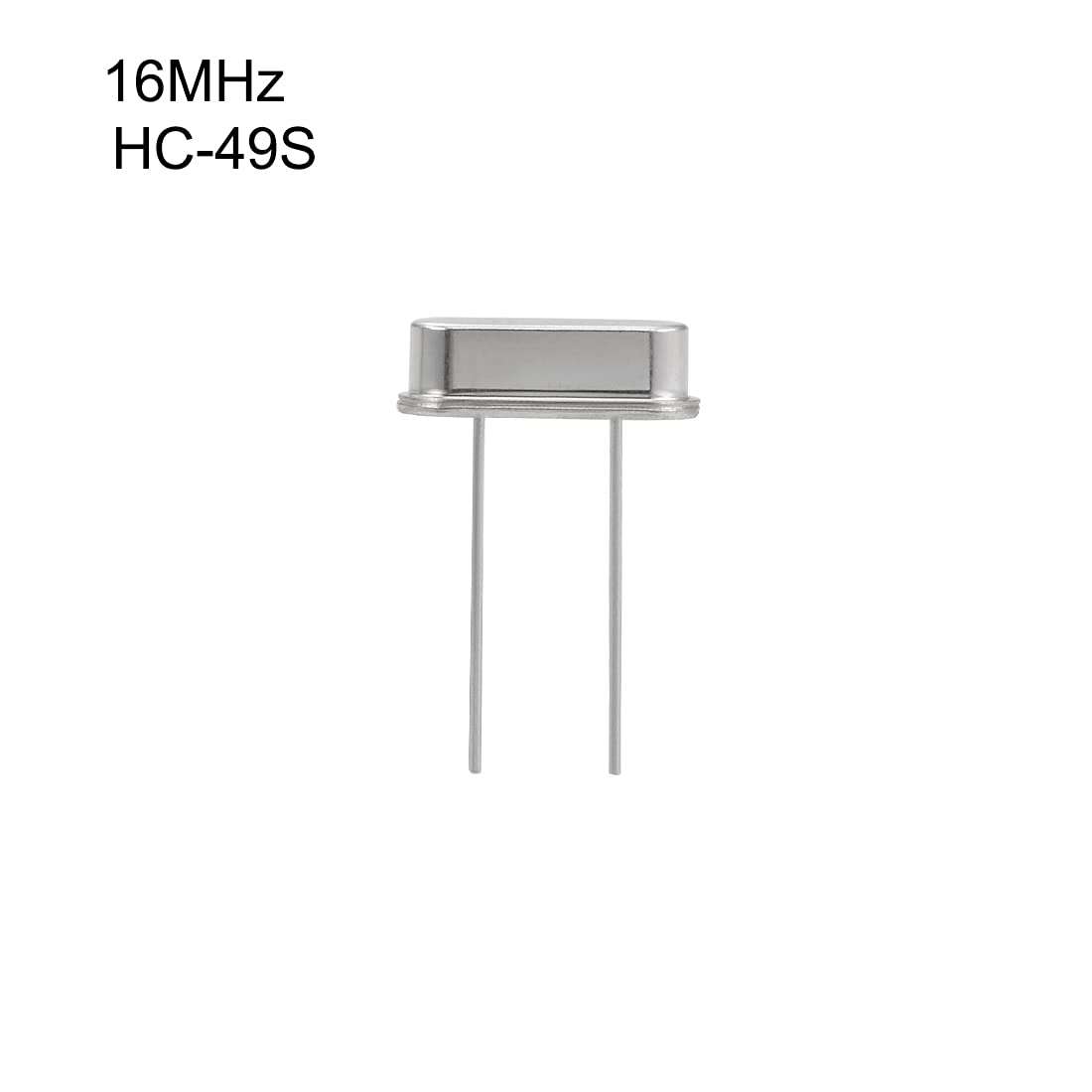
16MHz quartz crystal resonators in DIP packages provide the stable clock signals needed for microcontroller operation and frequency generation. The 16MHz frequency is commonly used with Arduino boards and many other microcontrollers.
Stable Frequency Reference - ±20ppm to ±50ppm accuracy for reliable timing
ThroughHole DIP Package Easy breadboard and PCB mounting
Available in HC49S (2pin) and metal DIP (4-pin) packages
2-pin passive crystals require external load capacitors (typically 20pF)
Active crystal oscillators (4-pin) are powered devices that output a square wave
= Common 16MHz DIP Resonator Options =
Passive Crystal Resonators (HC49S 2Pin)
| Parameter | Value |
|---|
| Package | HC49S (2pin DIP) |
| Frequency | 16MHz |
| Frequency Tolerance | ±20ppm |
| Load Capacitance | 20pF |
| Equivalent Series Resistance (ESR) | 50Ω to 60Ω |
| Operating Temperature | -40°C to +85°C |
Active Crystal Oscillator (Metal DIP 4-Pin)
| Parameter | Value |
|---|
| Package | Metal DIP 4-Pin |
| Frequency | 16MHz |
| Frequency Stability | ±50ppm |
| Load Capacitance | 50pF |
| Supply Voltage | 5V (4.5V to 5.5V) |
| Operating Temperature | -40°C to +85°C |
Passive crystals require capacitors (typically 20pF) to form the oscillator circuit
Active oscillators need power (VCC and GND) and output a readytouse clock signal
= Key Features =
+Low Cost and Widely Available - Standard 16MHz resonators in DIP format
+Compatible with Arduino, PIC, AVR, and 8051 microcontrollers
+Hermetically Sealed HC49S Package Protects against moisture and contaminants
+LeadFree and RoHS Compliant Environmentally friendly construction
== Applications ==
- Arduino and microcontroller clock sources
- Frequency counters and signal generators
- Communication and timing circuits
- Embedded system design and prototyping
- CPU and peripheral clock generation
Versatile and Reliable - Standard timing components for digital systems
Easy to Use Simple 2pin or 4pin throughhole design
√ Available in 2pin passive and 4pin active oscillator configurations
√ Standard 2.54mm pin pitch for breadboard and PCB compatibility
√ Suitable for hobbyist, educational, and professional applications
= Troubleshooting =
Microcontroller not starting:
- Check that load capacitors are correctly installed (for 2-pin crystals)
- Verify power supply is stable (for 4-pin oscillators)
- Avoid long trace lengths between crystal and MCU
Oscillator not functioning:
- Ensure ESR value matches microcontroller specifications
- Check for soldering defects or loose connections
- Verify frequency tolerance meets your application requirements