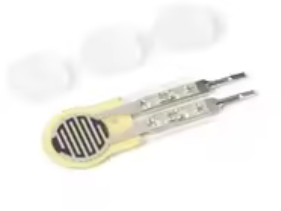
Resistive Thin Film Pressure Sensor Flexible Force Sensitive Resistor (FSR)
KSH 900.00
In Stock
This resistive thin film pressure sensor is a flexible force sensitive resistor (FSR) that changes its resistance in response to applied force . It is designed for precise pressure detection in applications ranging from DIY electronics to medical and wearable devices .
| Parameter | Value |
|---|---|
| Force Range | 20g to 10kg depending on model |
| Response Time | <10ms |
| Recovery Time | <15ms |
| Thickness | 0.25mm to 0.4mm |
| Durability | Over 1 million actuations |
| Operating Temperature | -40°C to +85°C |
Piezoresistive Sensing - Resistance decreases with applied force
Flexible and UltraThin Conforms to various surfaces for versatile mounting
Waterproof Option - Suitable for humid environments
RoHS Compliant - Environmentally friendly construction
Long Operational Life - More than 1 million cycles
√ Connects easily with Arduinos and development boards using simple resistor divider
√ Compatible with 3.3V typical test voltage
√ Responds to both light and heavy force ranges
No resistance change:
Inconsistent readings: