YF Water Flow Sensor (YF-S201)
= Liquid Flow Measurement for Arduino and Automation Projects =
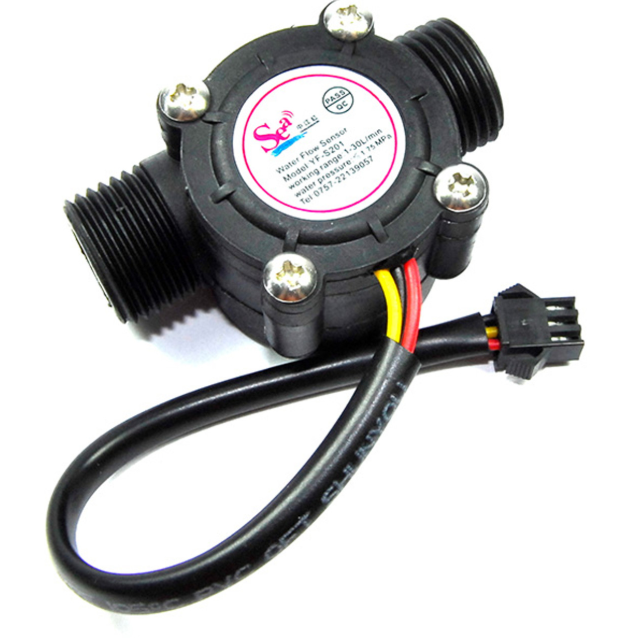
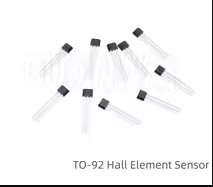
The YF-S201 water flow sensor is an affordable Hall Effect based device that measures liquid flow rate by counting pulses from a rotating magnetic rotor . Ideal for monitoring water consumption, coffee machines, and automated irrigation systems .
Hall Effect Pulse Output - Measures flow rate via frequency pulses proportional to liquid flow
Wide Measurement Range - Flow rate from 1 to 30 liters per minute
Operating voltage is 5V to 18V DC with max current 15mA at 5V
Use external interrupt pin (e.g., D2 on Arduino) for accurate pulse counting
Must be installed vertically with max 5° tilt to ensure proper operation
= Technical Specifications =
| Parameter | Value |
|---|
| Model | YF-S201 |
| Flow Rate Range | 1-30 L/min |
| Output Pulse Characteristic | Frequency (Hz) = 7.5 × Flow Rate (L/min) |
| Pulses per Liter | 450 |
| Operating Voltage | 5 to 18V DC |
| Max Current | 15mA at 5V |
| Accuracy | ±5% (2-30 L/min range) |
| Max Water Pressure | 1.75 MPa |
| Operating Temperature | -25°C to +80°C |
= Key Features =
+Hall Effect Sensing Principle - Sealed magnetic rotor generates electrical pulses proportional to flow
+Stainless Steel Shaft - Durable impeller construction for long service life
+Simple 3Wire Interface VCC (red), GND (black), Pulse Output (yellow)
== Applications ==
- Automated irrigation and plant watering systems
- Coffee machines and beverage dispensers
- Water consumption monitoring and leak detection
- Industrial cooling and filling systems
Affordable Flow Monitoring Lowcost solution for Arduino automation projects
Straightforward Integration - Works with Arduino UNO, ESP32, and Raspberry Pi
√ Compatible with 1/2" standard pipe fittings
√ Sealed design protects electronics from moisture
√ G1/2 male thread for easy installation
= Connection Guide =
YF-S201 to Arduino:
- Red wire: 5V power
- Black wire: GND
- Yellow wire: Digital pin (e.g., D2 with interrupt)
Use a 10kΩ pull-up resistor on the signal line for stable readings
Each pulse corresponds to approximately 2.25 mL of water
= Troubleshooting =
No pulse output:
- Check power supply (5-18V DC)
- Verify water flows in correct direction (arrow on body)
- Ensure sensor is not clogged with debris
Inaccurate readings:
- Maintain vertical installation (max 5° tilt)
- Calibrate pulse factor for your specific sensor
- Avoid high pressure or exceeding max flow rate