LM2596S DC-DC Buck Converter (Adjustable)
= HighEfficiency StepDown Voltage Regulator Module for DIY and Embedded Projects =
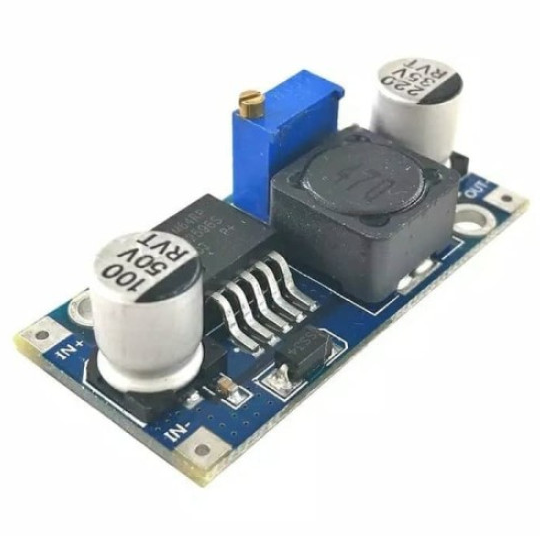
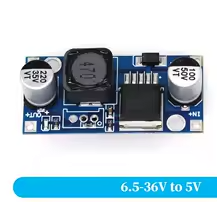
The LM2596S is a popular and versatile buck converter module that provides a highefficiency solution for stepping down DC voltages . Based on the LM2596S switching regulator IC, it is capable of driving a 3A load with excellent regulation, making it ideal for powering microcontrollers, sensors, LED strips, and other electronic projects from a highervoltage supply .
HighEfficiency StepDown Conversion - Converts higher DC voltages to lower, stable outputs with up to 92% efficiency .
Wide Input and Adjustable Output Range - Accepts 4.5V to 40V input and provides an adjustable output from 1.25V to 35V .
Input voltage range: 4.5V to 40V DC. Output voltage: 1.25V to 35V (continuously adjustable via potentiometer) .
Maximum output current: 3A (2A recommended for continuous operation to avoid overheating) .
The output voltage must be at least 1.5V lower than the input voltage for proper regulation .
= Key Features =
+Efficient Buck Topology - Uses a 150kHz switching frequency to minimize power loss and heat generation compared to linear regulators, with efficiency up to 92% .
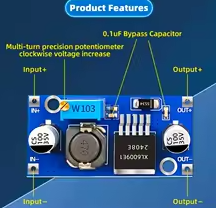
+Simple Adjustment Onboard precision potentiometer for easy voltage adjustment; turn clockwise to increase voltage, counterclockwise to decrease .
+Builtin Protection Features thermal shutdown and current limit protection to safeguard against overloads and overheating .
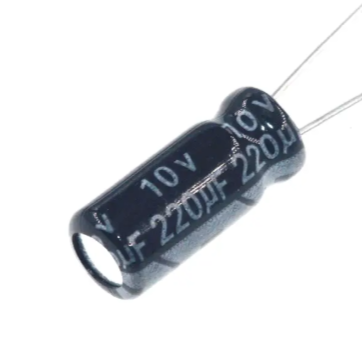
+Compact and Durable Modules often feature highquality components like Sanyo solid capacitors, high-Q inductors, and a thick PCB for improved reliability and heat dissipation .
== Applications ==
- Powering Arduino, ESP32, Raspberry Pi, and other microcontroller projects from 12V or 24V batteries .
- Adjustable power supply for DIY electronics and benchtop testing .
- Voltage regulation for LED strips, motors, and other high-current loads .
- Industrial equipment, power transformers, and automotive electronics .
Reliable and CostEffective A proven and widely used component for various voltage regulation tasks.
Easy to Use Simple 4terminal connection (IN, IN, OUT, OUT), plugandplay design .
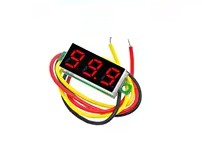
√ Available with and without voltmeter displays for real-time monitoring .
√ Standard module with screw terminals for easy wiring, no soldering required .
= Troubleshooting =
Module not outputting correct voltage:
- Check that input voltage is at least 1.5V higher than the desired output .
- Ensure input connections (IN+, IN-) are correct and the power supply is adequate.
- Adjust the potentiometer slowly while monitoring the output with a multimeter.
- Verify the load current does not exceed the 3A maximum (or 2A recommended for continuous use) .
Module overheating:
- For loads over 2A, a heatsink is recommended .
- Ensure adequate airflow around the module.
- Check for short circuits on the output.